
 Blogs
Blogs
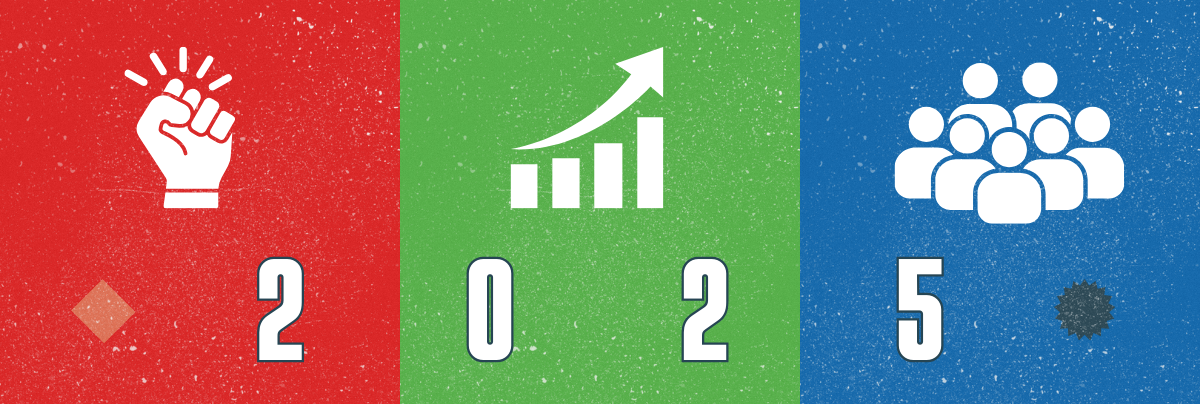
2025 - Where Power, Progress, and People Collided
2025 did not arrive with spectacle, nor did it depart with clarity. It moved with pressure, often unseen, building up across systems that were already strained.
2025 did not arrive with spectacle, nor did it depart with clarity. It moved with pressure, often unseen, building up across systems that were already strained. The year felt less like a sequence of events and more like a set of forces converging - sometimes abruptly, sometimes silently. It left behind friction rather than resolution.
Power asserted itself with familiarity. Institutions spoke in rehearsed tones, states guarded their interests with sharpened edges, and authority appeared more concerned with holding ground than charting a course. Progress, meanwhile, surged ahead with confidence born of capability, not reflection. Technology advanced faster than public understanding, faster even than institutional readiness, pulling societies forward whether they were prepared or not. And people - never a single mass, never fully aligned - responded in fragments: with protest, with adaptation, with withdrawal, with quiet endurance.
What marked 2025 was not a crisis alone. The world has known worse. What defined it was the collision. Power met progress without restraint. Progress encountered people without pause. People pushed back against power, sometimes effectively, often briefly. These encounters did not produce synthesis; they produced heat, noise, and fatigue.

Power - The Persistence of Authority
Power in 2025 did not announce itself with ambition. It operated with instinct.
Across continents, authority leaned inward. States spoke the language of stability while acting from anxiety. Institutions projected control, yet their gestures revealed defensiveness rather than confidence. The machinery of power remained intact, but its imagination felt limited, constrained by short horizons and immediate threats.
Long wars continued without moral reckoning. Their vocabulary hardened into routine. What once shocked now blends into background noise. Diplomacy followed a familiar script: meetings, statements, summits, declarations of unity. The theatre remained convincing enough, but outcomes rarely altered the underlying trajectory. Agreements paused conflict more often than they resolved it.
Leadership changes in several parts of the world carried symbolic weight but modest structural impact. Electoral mandates spoke of change, yet governance settled quickly into a state of continuity. The rhetoric shifted faster than the policies. Power had learned how to survive turbulence without transforming itself.
Security regained primacy. Borders hardened in language if not always in law. Surveillance expanded quietly, justified by protection rather than suspicion. Emergency measures outlived the emergencies that produced them. Authority grew comfortable operating in a provisional mode, where exceptions gradually became the norm.
What stood out was not the power itself, but its caution. Institutions acted less to shape the future and more to prevent loss of control. Risk aversion replaced vision. Preservation replaced renewal. Power did not collapse; it endured - by narrowing its scope and lowering its aspirations.
This persistence carried a cost. Trust eroded slowly, not through dramatic failure, but through repetition. When outcomes stagnate and explanations recycle, legitimacy thins. Power remains present, but its moral gravity weakens. It governs space, not conviction.
In 2025, authority survived everywhere. Leadership prevailed. States remained functional. Yet the year revealed a quieter truth: power had learned to continue without persuading, to operate without inspiring, to manage without meaningfully guiding.
Progress - Acceleration Without Stillness
Progress in 2025 did not slow down to ask permission. It advanced because it could.
Technology moved from being an enabler to becoming infrastructure. Artificial intelligence, automation, and data systems stopped presenting themselves as optional tools and began asserting inevitability. Decisions once debated were now deployed. Systems once tested were now embedded. The pace itself became the argument.
What changed was not only capability, but expectation. Productivity gains were assumed. Efficiency was demanded. Adaptation was framed as a responsibility rather than a choice. Those who struggled to keep up were described as lagging, not excluded. Progress carried its own moral framing: forward movement signaled virtue; hesitation implied failure.
Yet this acceleration left little room for pause. Regulation followed, but never led. Ethical debates surfaced, but often after implementation. Governance attempted alignment, but the ground kept shifting. The result was a familiar tension: remarkable innovation paired with growing unease. Tools became more powerful; understanding became thinner.
Scientific advances continued to stretch human reach - into computation, climate modeling, and space exploration. These achievements carried genuine promise. At the same time, they highlighted an imbalance. The ability to build outpaced the capacity to absorb consequences. Progress delivered answers faster than societies could frame questions.
There was also a quiet narrowing of imagination. Progress increasingly came to be defined by metrics: scale, speed, and optimization. Broader ideas - well-being, equity, restraint - struggled to compete with dashboards and benchmarks. What could be measured commanded attention; what could not often faded from view.
By the end of the year, progress felt less like a journey and more like momentum. Direction was assumed. Reflection was postponed. The machinery ran smoothly, but the silence around the purpose grew louder.
In 2025, progress did not fail. It succeeded relentlessly. The unresolved matter was whether success alone was enough to justify the velocity.
People - Between Agency and Exhaustion
People in 2025 were neither silent nor unified. They were present, reactive, expressive - and visibly worn.
Public life felt crowded. Opinions surfaced instantly, often forcefully, then vanished just as quickly. Platforms amplified voices but shortened memory. Participation increased while patience diminished. Many spoke; fewer felt heard. Engagement became frequent, sustained involvement rare.
Across societies, signs of agency appeared in bursts. Protests emerged around wages, rights, climate, and governance. Young voices questioned inherited structures with clarity and impatience. Workers renegotiated their relationship with labour in economies reshaped by automation and remote systems. These actions mattered, yet they often felt episodic, struggling to translate momentum into durable change.
Exhaustion ran beneath the activity. Constant alerts, shifting rules, and perpetual adaptation produced a low-grade fatigue that rarely made headlines. People learned to cope rather than hope. Withdrawal became as common as resistance - less dramatic, more enduring. Many opted for smaller circles, limited ambitions, and private steadiness.
The digital world intensified this condition. Connection remained abundant, intimacy less so. Identity hardened into labels. Disagreement escalated quickly, and resolution rarely followed. The public sphere did not disappear; it fragmented. Dialogue gave way to parallel monologues.
What defined 2025 was not apathy. It was a strain. People continued to care, but caring required effort in an environment that rewarded speed over depth. The agency existed, yet it competed with the need to conserve energy.
By year’s end, societies had not disengaged. They had adjusted. Expectations narrowed. The appetite for grand narratives weakened. What remained was a search for manageable meaning - spaces where action felt proportionate, where effort seemed to count.
In 2025, people did not lose their voice. They learned how costly it had become to keep using it.
India and the Global South - Standing at the Crossroads
For much of the Global South, 2025 did not feel like a departure from uncertainty. It felt like an intensification of familiar pressures.
India occupied a visible position in this year’s global choreography. It spoke with confidence in international forums, actively engaged in conversations on technology and governance, and positioned itself as both a participant and a bridge. Yet this outward assurance coexisted with inward complexity. Growth narratives remained strong, but their distribution was uneven. Ambition expanded faster than institutional capacity in many places.
Climate stress was no longer abstract. Heat, rainfall, and resource strain shaped daily life more directly, especially for those already operating at the margins. Development and sustainability were not competing ideals here; they were simultaneous necessities. The challenge lay in reconciling urgency with endurance.
Technology adoption followed a similar pattern. Digital systems promised inclusion and efficiency, and often delivered both. At the same time, they exposed gaps in access, literacy, and resilience. Progress arrived unevenly - empowering some, bypassing others. The distance between policy intent and lived experience remained visible.
Across South Asia, the broader mood mirrored global currents but with sharper stakes. Political discourse grew louder. Social cohesion faced repeated tests. Yet there was also persistence - a refusal to disengage entirely, even when outcomes disappointed. Civic life did not recede; it adapted.
What distinguished the Global South in 2025 was not fragility, but compression. Economic aspiration, demographic pressure, climate exposure, and technological acceleration converged more tightly here than elsewhere. There was less buffer, less margin for error.
India, like many of its peers, stood at a junction rather than a destination. Neither model nor exception, it reflected the contradictions of the age: confidence paired with constraint, possibility alongside precarity. The year did not resolve these tensions. It made them harder to ignore.
Nature as Witness - Northern Norway Before Winter
There was a moment in 2025 when the noise receded.
In the north of Norway, just before real winter took hold, the world narrowed to essentials. Darkness arrived early and stayed without apology. The air sharpened. Each step on the trail demanded attention. There were no signals to check, no updates to absorb, no urgency beyond staying present and moving forward.
Trekking at night in that landscape stripped life down to scale. The body was cold and fatigued. The mind adjusted to silence. Time slowed, not by design, but by necessity. Nothing there responded to human schedules or ambitions.
Then the sky shifted.

The northern lights appeared without drama, without announcement. They did not perform; they unfolded. Slow arcs of green and pale violet crossed the darkness, indifferent to observation. There was no message to decode, no lesson offered—just motion, vast and unhurried.
Standing there, it became difficult to maintain the proportions that dominate daily life. Power lost its immediacy. Progress felt irrelevant. Human debates, so consuming elsewhere, seemed momentary against a sky that had moved this way long before modern concerns took shape.
Nature offered neither comfort nor warning. It bore witness. It quietly reminded us that not all systems accelerate, not all forces collide. Some endure by remaining untouched by urgency.
That night did not resolve the year’s questions. It placed them in perspective. The collisions of 2025 - between authority and innovation, ambition and capacity - belonged to human time. The Arctic sky followed a rhythm entirely its own.
Returning from that place, the world resumed its pace. Yet something lingered: the awareness that stillness is not absence, and that meaning does not always emerge from motion.
Collision Points - Where Power, Progress, and People Met
The defining feature of 2025 was not any single force, but the friction created when they converged.
Power increasingly relied on progress to extend its reach. Technology offered efficiency, predictability, and scale - qualities that authority values deeply. Systems designed to optimise services also became instruments of oversight. The language remained benign: security, convenience, national interest. The effect was cumulative. Decision-making grew distant, more automated, less accountable to lived complexity.
Progress, in turn, drew legitimacy from power. Large-scale innovation required capital, regulation, and geopolitical alignment. What could be built was shaped by what could be sanctioned. The result was innovation that moved fast but along narrow corridors, guided less by public deliberation and more by strategic advantage.
People occupied the narrowing space between these two—beneficiaries at times, subjects at others. Convenience arrived bundled with surveillance. Opportunity came paired with precarity. Participation was encouraged, but often within predefined limits. Choice existed, yet it increasingly felt curated.
The collisions surfaced most clearly in shared arenas. Climate policy revealed the tension between economic ambition and ecological constraint. AI governance exposed the gap between technical capability and social readiness. Public discourse struggled to keep pace with systems that changed faster than collective understanding.
These were not failures of intent alone. They reflected misaligned tempos. Power operates on preservation. Progress thrives on acceleration. People require continuity and trust. When these rhythms clash, strain becomes inevitable.
By the end of the year, it was evident that none of the three could retreat entirely. Power could not disengage. Progress would not pause. People would not disappear. The challenge lay not in dominance, but in coordination - a task 2025 revealed to be far more demanding than assumed.
The collisions did not break the system. They exposed its limits.
What 2025 Leaves Us With
2025 did not end with decisive victories or apparent failures. It left behind impressions rather than conclusions. Systems remained functional. Institutions stood. Technology advanced. Societies continued. Yet the sense of ease that once accompanied progress felt absent.
What lingered most was awareness. Awareness of how little margin remains between stability and strain. Awareness that speed amplifies both benefit and harm. Awareness that authority without trust must rely increasingly on control. Awareness that participation without patience becomes performance.
Illusions thinned over the year. The belief that innovation naturally produces equity has weakened. The assumption that governance automatically commands legitimacy faded. The hope that public discourse alone can correct systemic drift appeared fragile.
At the same time, resignation did not fully take hold. People adjusted rather than surrendered. Communities recalibrated expectations. Smaller forms of meaning gained value: local steadiness, private integrity, selective engagement. The search shifted from grand solutions to workable balances.
The collisions of 2025 did not resolve anything. They clarified what was already in motion.
Epilogue - Looking Ahead Without Certainty
The forces that shaped 2025 did not dissipate with the year’s end. Power remained cautious. Progress continued its momentum. People carried forward both resolve and fatigue. Nothing suggested an imminent settling of these tensions.
What changed was perception. The collisions of the year sharpened awareness of scale and limitation. They revealed that endurance matters as much as ambition, and that restraint can be as consequential as action. Not every problem yields to acceleration. Not every imbalance corrects itself through intensity.

The year ahead will bring its own pressures, its own claims on attention. Whether they lead to correction or further strain remains uncertain. What 2025 offered was not direction, but orientation - a clearer sense of where friction arises when power, progress, and people converge.
Certainty remains elusive. Awareness does not guarantee wisdom. Yet the capacity to notice - to pause, to recalibrate, to resist the pull of perpetual urgency - may prove essential.
The collisions continue. How they are navigated will determine what follows.
Add your comments and queries
Share feedback, questions, or corrections. We read every message.